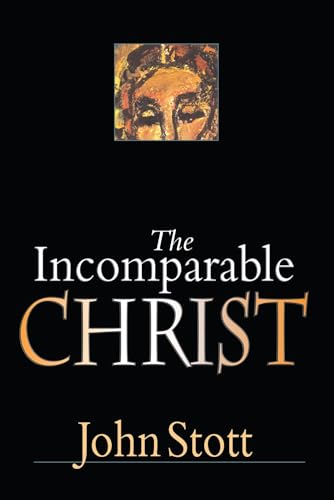
John Stott’s books are always eagerly awaited. According to David Edwards, he has been the most influential clergyman in the 20th century Anglican Church except for William Temple. He is also widely respected by evangelical Christians of all denominations, and this wide respect has survived both his ecumenical involvement (subjecting the movement to evangelical critique from within) and his somewhat tentatively expressed views on eternal punishment.
His books always penetrate to the heart of the matter being expounded and are expressed in clear, attractive prose and as simply as the subject allows. The present volume is a gem. It is based on his AD 2000 London Lectures in Contemporary Christianity, and, although most evidently Christological, will not be easy for librarians to classify because of its varied material. Despite this, all coheres well, and it is definitely a book, not just a collection of essays. After an introduction, there are four sections:
Part 1: The Original Jesus (or how the New Testament witnesses to him), moves through the whole NT (except Revelation) in 55 pages and is a masterpiece of selection and compression. The main Christological emphases of each book are highlighted. He is, of course, as clear as crystal on the deity of Jesus, and it may seem unreasonable to mention an omission, but it would have been good to have more than just a few words on great title ‘Son of God’, especially in the Johannine section.
Part 2: The Ecclesiastical Jesus (or how the Church has presented him), is a look at ‘how the church at different times, now faithfully, now unfaithfully, has preached Christ to the world’. He points out how preaching has been conditioned by society’s outlook at various periods and places. His selection of writers is interesting. Some of them theologians, others ethical teachers, and each has seen and communicated something of value but not always with recognition of other balancing, sometimes more central, features. His final selection is Tom Wright.
Part 3: The Influential Jesus (or how he has inspired people), takes us right through the earthly life of Jesus and beyond, from the Bethlehem Stable to the Last Judgement, and shows how each stage has had its influence on certain representative people, most of them Christians, but one, Mahatma Gandhi, a Hindu. Those in Part 2 are mostly thinkers and those in Part 3 activists, but some are both, for instance Gutierrez in Part 2 and Roland Allen in Part 3. His concluding section (with echoes of the Lausanne Covenant) is on the radical nature of Christ’s influence.
Part 4: The Eternal Jesus (or how he challenges us today), is a Christ-centred exposition of the Book of the Revelation. He sets out four principles of interpretation: the book’s symbolism; its addressing of past, present and future; its celebration of the victory of God; and its focus on Jesus Christ. He concentrates on its ten most striking Christological visions. The overall interpretation is parallelistic and amillennial. The style is somewhat homiletical, no doubt reflecting the influence of sermons he has preached. At times he tends to make assertions without giving evidence, perhaps inevitable in a brief treatment, but unfortunate in relation to Revelation 14:9–11 because of its bearing on the nature of eternal punishment.
I often get more devotional stimulus from books of theology than from explicitly devotional literature. The present volume is a marked example of this and I am thankful for it.